🎯 Draw your way to focus
Notes from a workshop in a room full of doodlers

I opened with a question:
“Hands up if somebody told you off at school for doodling in the margins?
Or for gazing out of the window, lost in your own world?
Telling you to ‘Sit up and pay attention.’“
Real and virtual hands went up all across the grid.
Then the chat filled with a flurry of Yes! Same! Me too!
It was so fast I could barely read them as they landed.
There were over 60 people on that video call, and it seemed like almost every one of them had been told the same thing, at some point, by someone convinced that a moving pen or their fidgety body meant an absent mind.
As if curiosity was something to be tidied away.
This was the opening moment of the ‘Draw Your Way to Focus’ workshop I ran last week.
A Zoom room full of doodlers
Even after years of running these kinds of sessions, the sight of a Zoom grid still makes me smile. Each person in their own little world, on a sofa, at a kitchen table, perched on an office chair, with a pen or pencil ready. People from everywhere, all ages and backgrounds, united by a shared curiosity. And the occasional cat walking across a keyboard.
The premise of the session was how drawing and doodling can actually help your focus.
We started with neurographic art, softening sharp corners into gentle curves, letting the lines wander like neurons finding their way.
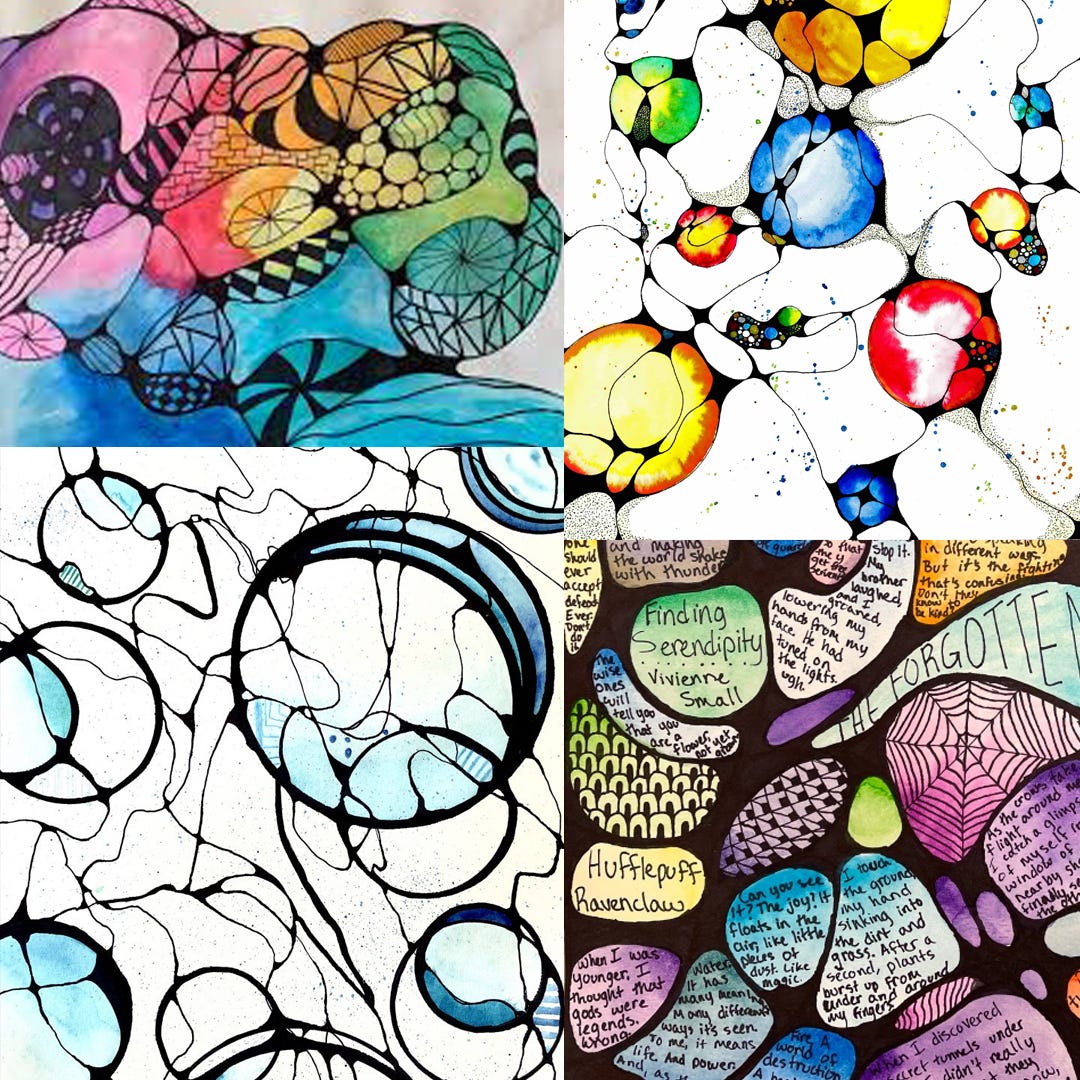
As pens roamed across paper, I shared what I’ve learned about how doodling shapes our focus, our minds and even helps us retain information. I kept nudging everyone to let their hands keep moving, even as they listened.
Then we shifted into a second exercise, a guided doodle, all of us tracing the same lines together.
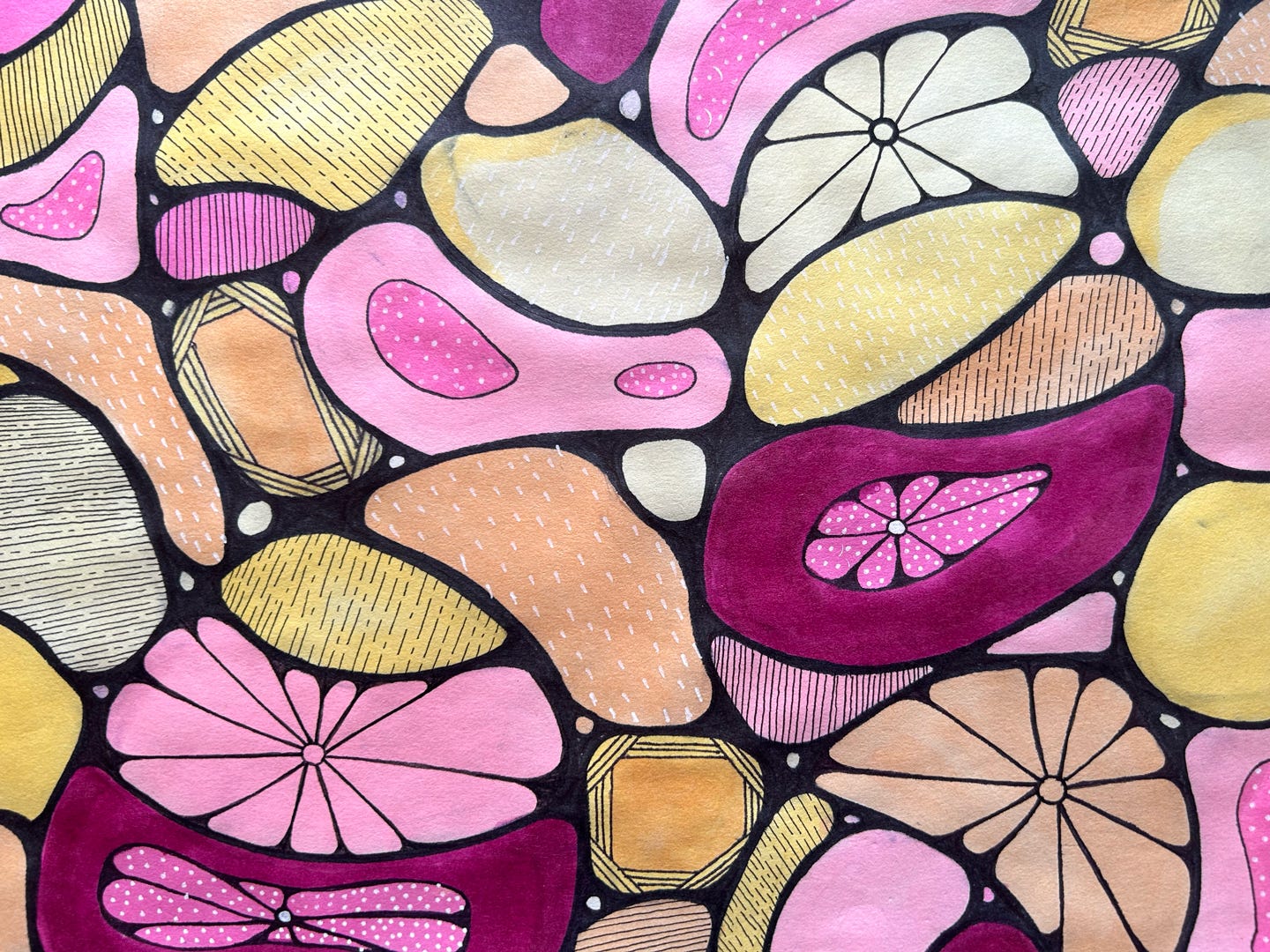
Afterwards, the messages started coming in too.
“That was a simple dose of goodness. Goodness, that’s clear, like a drink of water when you’re thirstier than you’d realised. Must dash now. Must doodle often.”
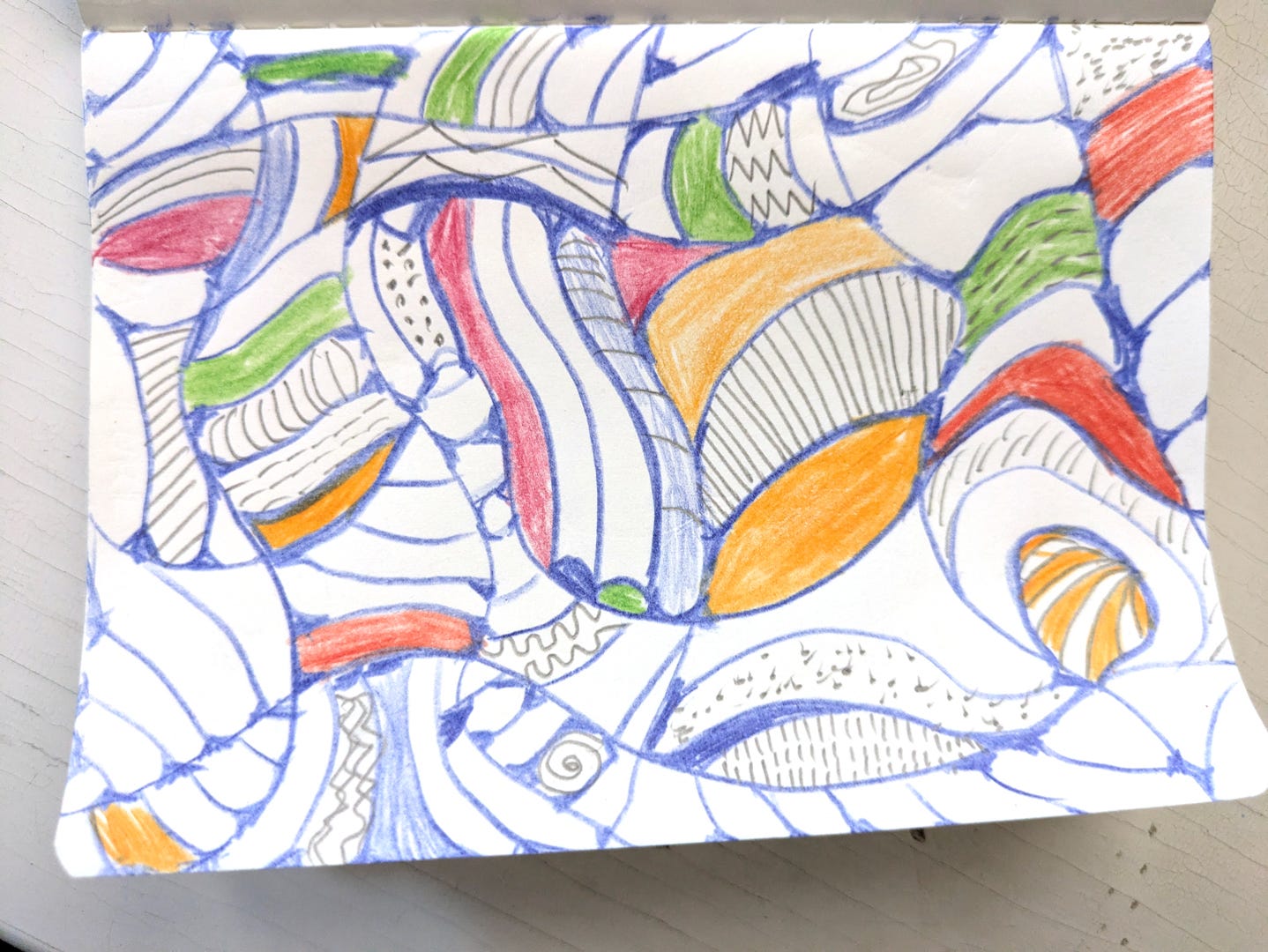
“Hi, Georgie! Thanks so much for the doodling session today - I am confident it changed my life. I have always been stressed by doodling because I am a perfectionist, but this form of doodling was so peaceful for me. I had never heard of it before, and I’m so grateful for the introduction! Sharing my finished product with you.”
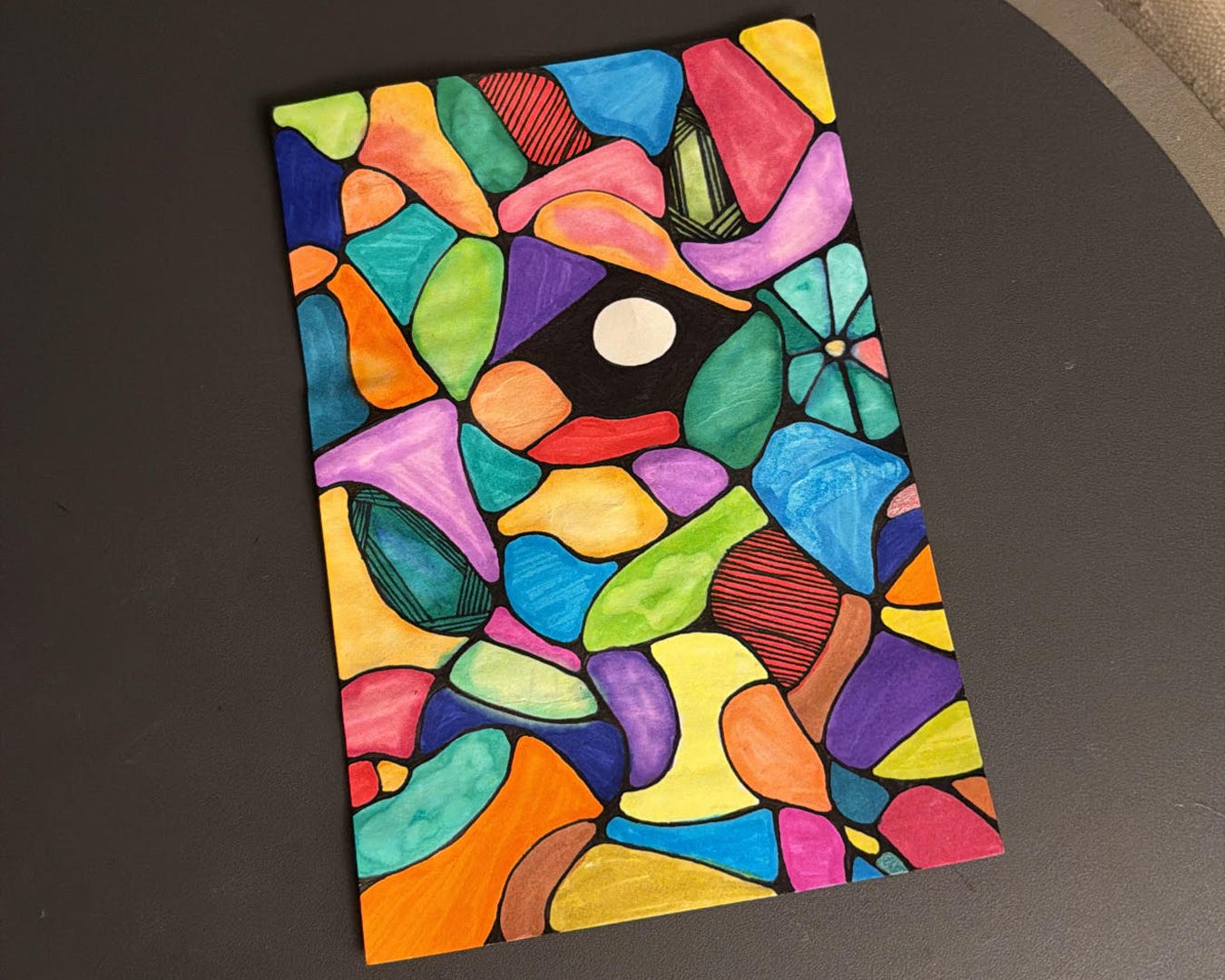
Right at the end, I asked the group what they remembered from the first half. What had I actually said, while their hands were busy doing something else?
The chat ignited again.
Daisy Fancourt. Art Cure. 29% memory retention. The A.R.T. framework (more on that another time)...
Alright, maybe it wasn’t the most scientific experiment, but it proved something important. Doodling really does help us hold onto what matters.
The message stayed with me
😢 Stressed by doodling. It’s quietly heartbreaking, isn’t it, that something as innocent as a wandering line could become a source of tension. Perfectionism has a way of sneaking into even the simplest pleasures, turning a harmless loop of ink into another thing to get right.
I’ve always wanted to change that. It takes me back to school days, when a well-meaning adult would try to press pause on the things that felt most natural to us as kids. Over time, we learned to press pause on ourselves.
The doodle, the restless movement, the mind drifting into daydreams. Why did these things have to be labelled as wrong? If only we’d been taught to see them as gifts, maybe perfectionism and procrastination wouldn’t have overgrown in our minds. Maybe, just maybe, we’d have felt a little more at home in ourselves.
That workshop, with its focus on letting go of planning and fixing, made failure impossible. There was nothing to get wrong, because there was never a right answer waiting at the end.
Doodling gives us permission to be.
The Research
Study 1
Jackie Andrade, a psychology professor at the University of Plymouth, ran a study in 2009 where people listened to a deliberately boring phone message. Half were asked to doodle while they listened, shading simple shapes. The doodlers remembered 29% more of the message afterwards than the ones who just sat and listened.
I’d already half-discovered this for myself, long before I read the study. Most evenings, I find myself sketching while a podcast or a movie hums in the background. Later, when I look back at the page, it feels like a sensory map of what I heard while I was drawing.
I used to think it was just my own odd quirk. Turns out, it’s a bit of magic and neuroscience. One of these days, I’ll use it to cram for pub quizzes. Since moving, the hubby and I have made that a monthly ritual at our local pub.
What I love about Andrade’s study is the idea that doodling isn’t a distraction at all. It’s a way of holding your own attention, giving the restless part of your mind a gentle place to wander, so the rest of you can stay present and listen.
Study 2
In 2016, Girija Kaimal, a professor of creative arts therapies at Drexel University, ran a different kind of study with Kendra Ray and Juan Muniz. 39 adults spent 45 minutes making art- markers, clay, collage, whatever they chose- with no instructions given. They tested cortisol levels before and after. 75% had lower cortisol levels afterwards, and it made no difference whether they’d ever made art before.
What fascinates me is how doodling works in both directions. It can anchor you in the moment, giving your mind something to hold so it doesn’t drift away. Or you can use it to let go on purpose, to let your thoughts meander and return a little lighter. The same tool, two completely different gifts, depending on what you need.
There’s real neuroscience behind this, too. The salience network in our brains acts as a kind of switchboard, toggling us between focused doing and gentle daydreaming.
What I’ve learned from the research, and from my own experiments, is that it’s the practice of moving between these states that gets easier, rather than some mythical idea of focus as pure willpower.
Study 3
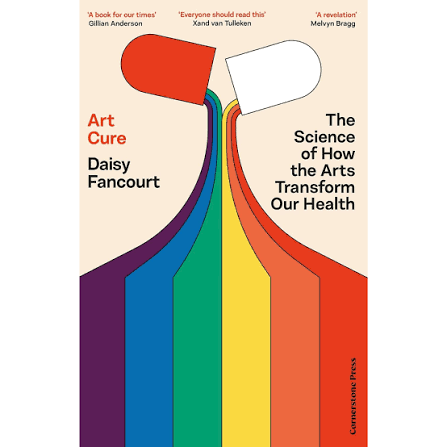
And zooming out even further, Daisy Fancourt, Professor of Psychobiology and Epidemiology at UCL and Director of the WHO’s Collaborating Centre on Arts and Health, calls the arts the forgotten fifth pillar of health, right up there with diet, sleep, exercise, and social connection.
Drawing and doodling are free, simple, and accessible, and my mind is blown that we’re not using them more in our daily lives, schools, and workplaces.
I built the session around the idea that a pen can do more than one job, depending on what you need. I use it differently before something mentally taxing, during a boring meeting, or at the end of a busy day.
Same pen, completely different purposes. It’s what I call the A.R.T. framework: Anchor, Retain & Trail Off. Knowing which one you need at a given moment is really useful, and I’ll be sharing more details on that in coming posts.
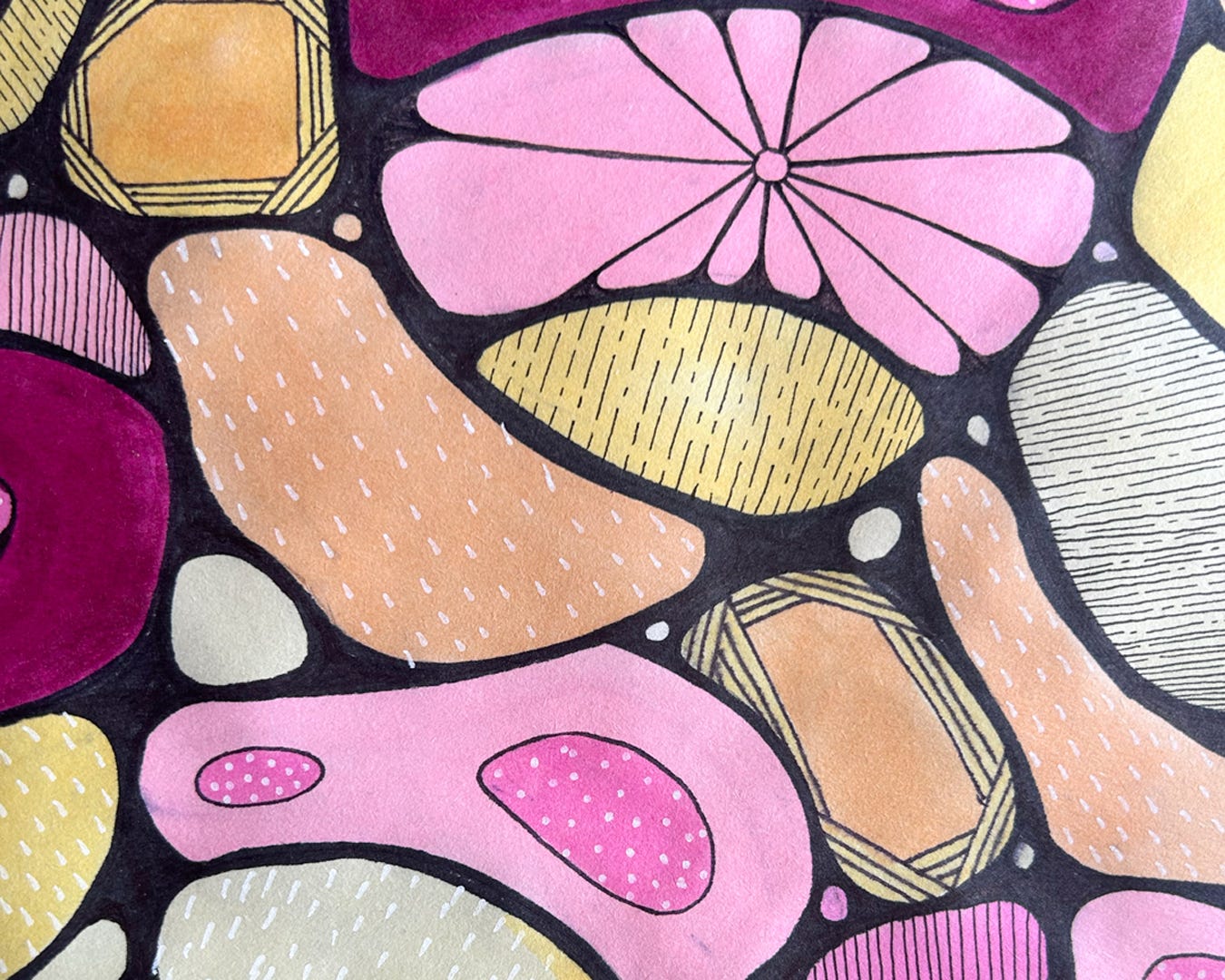
⬆️ I make these doodles to relax or to teach drawing, so they are quite different from my artwork. However, I’ll often discover new shapes and patterns to use in my artworks.
Coming home
In that workshop, I felt at home, in flow. I felt I was doing exactly what I was meant to do and exactly where I needed to be, by simply encouraging people to pick up a pen or a pencil and indulge their inner artist.
To doodle in the margins, to stare out of the window, to let their fidgety body find its freedom in movement.
Picasso said, “Every child is an artist.”
I say, “Every grown-up is an artist.”
I’m still chasing how to do more of this. If you’ve got thoughts on what that could look like, I’d love to hear them.
Have an inspired day 💕